

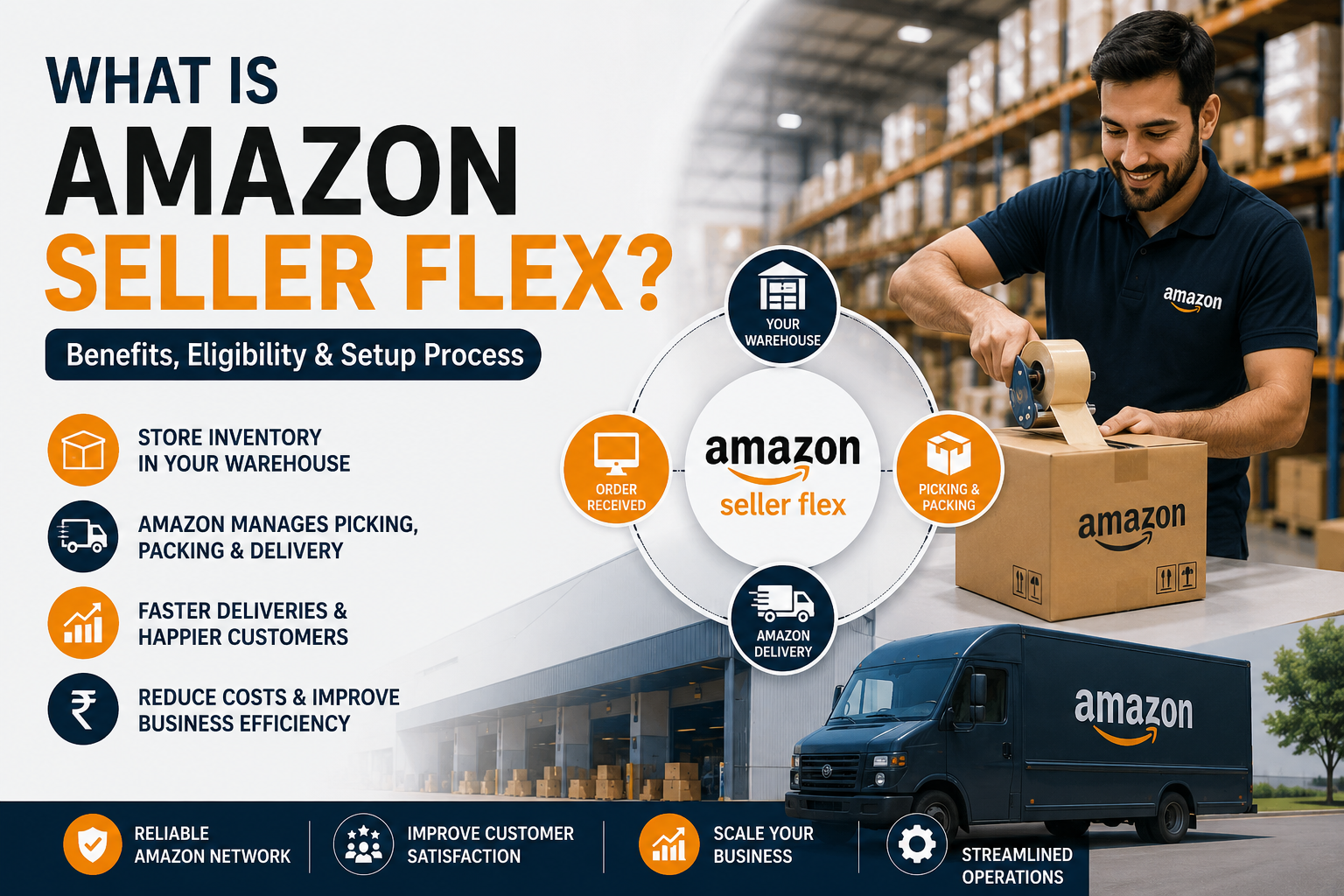
The Indian ecommerce industry has experienced tremendous growth over the past few years, with thousands of businesses choosing Amazon as their preferred marketplace. However, as competition increases, sellers are looking for faster and more efficient fulfillment solutions that improve customer satisfaction while reducing operational costs. One such solution is Amazon Seller Flex.
Amazon Seller Flex is a fulfillment program that allows sellers to store inventory in their own warehouse while Amazon manages the picking, packing, shipping, and customer delivery process. This model combines the flexibility of managing your own inventory with the speed and reliability of Amazon’s logistics network.
For businesses handling large inventories or high daily order volumes, Amazon Seller Flex offers an excellent alternative to traditional fulfillment methods. It helps sellers maintain inventory control while providing customers with fast deliveries and a premium shopping experience.
If you want to scale your Amazon business professionally, working with experienced experts can make a significant difference. Our Amazon Account Management Services help sellers optimize listings, improve sales performance, and manage their Amazon business efficiently. Learn more at:
What Is Amazon Seller Flex?
Amazon Seller Flex is a fulfillment model where Amazon extends its fulfillment capabilities directly to a seller’s warehouse. Instead of sending products to an Amazon Fulfillment Center, sellers keep their inventory in their own warehouse while Amazon’s technology manages warehouse operations.
When a customer places an order, Amazon automatically sends the order details to the seller’s warehouse. Warehouse staff pick and pack the products according to Amazon’s packaging standards, and Amazon’s logistics partners collect the package for delivery.
This system enables sellers to enjoy many of the advantages of Fulfillment by Amazon (FBA) without transferring inventory to Amazon warehouses.
Unlike standard fulfillment models, Amazon Seller Flex gives businesses greater inventory visibility, faster stock replenishment, and lower transportation costs while maintaining Amazon’s delivery promises.
How Does Amazon Seller Flex Work?
The workflow of Amazon Seller Flex is simple yet highly efficient.
Step 1: Inventory Remains at Seller Warehouse
Instead of shipping inventory to Amazon fulfillment centers, sellers store products in their own warehouse.
Step 2: Amazon Connects Warehouse Systems
Amazon integrates its warehouse management software with the seller’s inventory system, allowing real-time inventory updates and order management.
Step 3: Customer Places an Order
Once an order is received, Amazon instantly assigns it to the seller’s warehouse.
Step 4: Picking and Packing
Warehouse staff pick the products and pack them according to Amazon’s packaging guidelines.
Step 5: Amazon Picks Up the Shipment
Amazon’s logistics network collects the packages directly from the warehouse and delivers them to customers.
Step 6: Delivery and Customer Support
Amazon manages transportation, shipment tracking, customer communication, returns, and delivery support, ensuring a seamless shopping experience.
Key Features of Amazon Seller Flex
Some of the most valuable features of Amazon Seller Flex include:
- Inventory remains under seller control.
- Faster order processing.
- Access to Amazon’s logistics network.
- Reduced shipping delays.
- Better inventory visibility.
- Lower transportation costs.
- Improved warehouse utilization.
- Real-time inventory synchronization.
- Professional packaging standards.
- Faster customer deliveries.
These features make Amazon Seller Flex an attractive option for medium and large sellers looking to optimize fulfillment operations.
Benefits of Amazon Seller Flex
1. Better Inventory Control
One of the biggest advantages of Amazon Seller Flex is complete inventory control.
Since products remain in your warehouse, you can easily monitor stock levels, conduct quality inspections, and replenish inventory without waiting for shipments to reach Amazon fulfillment centers.
This flexibility is particularly useful for businesses managing seasonal products or frequently changing inventories.
2. Faster Deliveries
Customers expect quick deliveries.
With Amazon Seller Flex, Amazon’s logistics network handles transportation, helping sellers provide faster shipping and improve customer satisfaction.
Quick deliveries often lead to better reviews, repeat purchases, and higher seller ratings.
3. Lower Logistics Costs
Transporting inventory to multiple fulfillment centers can increase operational expenses.
Since inventory stays in your own warehouse, Amazon Seller Flex reduces inbound transportation costs and minimizes unnecessary inventory movement.
Businesses can allocate these savings toward marketing, product development, or expanding their product catalog.
4. Improved Warehouse Efficiency
Using Amazon Seller Flex encourages sellers to adopt standardized warehouse processes.
Amazon provides operational guidelines that improve:
- Inventory organization
- Picking accuracy
- Packing quality
- Warehouse productivity
These improvements reduce operational errors and increase fulfillment efficiency.
5. Better Customer Experience
Fast deliveries, professional packaging, accurate tracking, and reliable order fulfillment contribute to a superior customer experience.
Satisfied customers are more likely to leave positive reviews, recommend your products, and become repeat buyers.
Who Should Choose Amazon Seller Flex?
Amazon Seller Flex is particularly suitable for:
- Medium-sized ecommerce businesses
- Large inventory sellers
- Brands with dedicated warehouses
- High-volume Amazon sellers
- Manufacturers selling directly on Amazon
- Businesses managing thousands of SKUs
- Sellers requiring faster inventory replenishment
Small businesses planning rapid expansion can also benefit from Amazon Seller Flex once they meet Amazon’s operational requirements.
Eligibility Criteria for Amazon Seller Flex
Not every seller can immediately join Amazon Seller Flex. Amazon typically evaluates businesses based on several operational and performance factors before granting access.
Common eligibility requirements include:
Active Amazon Seller Account
Your Amazon seller account should maintain good performance metrics with minimal policy violations.
Warehouse Infrastructure
A dedicated warehouse with sufficient storage capacity, organized inventory management, and operational efficiency is generally required.
Order Volume
Amazon usually prefers sellers processing a significant number of daily orders, ensuring the program remains operationally efficient.
Inventory Management Capability
Sellers should have systems capable of maintaining accurate stock levels and timely inventory updates.
Operational Compliance
Businesses must follow Amazon’s packaging, labeling, quality control, and shipment preparation standards consistently.
Meeting these requirements improves your chances of qualifying for Amazon Seller Flex and benefiting from Amazon’s advanced fulfillment network.
Why Professional Amazon Account Management Matters
Managing a growing Amazon business involves much more than uploading products. Inventory optimization, advertising, account health, listing optimization, customer service, and fulfillment all require continuous attention.
Professional account management helps sellers avoid costly mistakes while improving visibility and conversions.
If you’re looking to scale your Amazon business, explore our dedicated Amazon Account Management Services:
Our team assists businesses with account optimization, listing management, advertising strategies, catalog management, compliance, and long-term growth planning.
How to Set Up Amazon Seller Flex
Once your business meets Amazon’s operational standards, the setup process for Amazon Seller Flex begins. Since the program is generally offered to eligible sellers (or through Amazon’s invitation/approval process in supported regions), you should first ensure your account performance and warehouse operations are ready.
Step 1: Check Your Eligibility
Before applying, verify that your business has:
- A registered Amazon Seller Account with good performance metrics.
- A dedicated warehouse capable of handling daily order fulfillment.
- Reliable inventory management practices.
- Consistent order volumes.
- Adequate staff for picking, packing, and dispatching orders.
Meeting these requirements increases your chances of approval for Amazon Seller Flex.
Step 2: Contact Amazon
Eligible sellers can express interest through Amazon Seller Central or their Amazon account manager. Amazon evaluates your business based on operational capability, warehouse standards, seller performance, and customer satisfaction metrics.
Step 3: Warehouse Assessment
Amazon conducts a warehouse evaluation to ensure your facility meets its operational standards. During this assessment, Amazon may review:
- Warehouse layout
- Storage capacity
- Barcode management
- Inventory accuracy
- Picking and packing process
- Safety measures
- Staff efficiency
Step 4: Technology Integration
After approval, Amazon integrates its warehouse management technology with your inventory system.
This integration enables:
- Real-time inventory updates
- Automatic order allocation
- Barcode scanning
- Shipment tracking
- Warehouse performance monitoring
Step 5: Staff Training
Amazon provides operational guidelines for warehouse employees covering:
- Picking procedures
- Packing standards
- Product labeling
- Quality checks
- Dispatch readiness
Proper training helps maintain Amazon’s delivery and customer service standards.
Step 6: Go Live
Once testing is complete, your warehouse becomes operational under Amazon Seller Flex. Customer orders begin flowing directly to your warehouse, while Amazon manages logistics and last-mile delivery.
Amazon Seller Flex vs FBA vs Easy Ship
Choosing the right fulfillment model depends on your business size, inventory, and operational goals.
| Feature | Amazon Seller Flex | Amazon FBA | Amazon Easy Ship |
|---|---|---|---|
| Inventory Location | Seller Warehouse | Amazon Warehouse | Seller Warehouse |
| Inventory Control | High | Limited | High |
| Amazon Delivery | Yes | Yes | Yes |
| Storage Charges | Lower | Higher | Minimal |
| Ideal For | Medium & Large Sellers | Small to Large Sellers | Small Sellers |
| Inventory Visibility | Excellent | Moderate | High |
| Warehouse Ownership | Seller | Amazon | Seller |
For businesses with established warehouse infrastructure, Amazon Seller Flex often provides greater flexibility while maintaining Amazon’s trusted delivery experience.
Best Practices for Amazon Seller Flex
To maximize the benefits of Amazon Seller Flex, sellers should follow these best practices.
Maintain Accurate Inventory
Incorrect stock levels can lead to order cancellations and negatively impact your seller performance.
Regular inventory audits help maintain inventory accuracy.
Follow Amazon Packaging Standards
Proper packaging reduces product damage during transportation and ensures customer satisfaction.
Always use Amazon-approved packing materials and labeling guidelines.
Improve Warehouse Efficiency
Organize products systematically to reduce picking time.
Use barcode scanners and inventory software wherever possible.
Monitor Performance Metrics
Keep track of:
- Order Defect Rate (ODR)
- Late Shipment Rate
- Cancellation Rate
- Customer Reviews
- Delivery Performance
Strong performance metrics improve your overall account health.
Invest in Professional Account Management
Managing inventory, advertising, catalog optimization, reimbursements, compliance, and fulfillment simultaneously can be challenging.
Professional Amazon account management helps businesses focus on growth while experts handle daily operations.
If you’re looking for experienced Amazon professionals, explore our Amazon Account Management Services:
https://e-comareena.com/amazon-account-management-services-in-delhi-ncr/
Our specialists assist with listing optimization, account health, PPC advertising, inventory planning, brand growth, and marketplace expansion.
Common Challenges of Amazon Seller Flex
Although Amazon Seller Flex offers numerous advantages, sellers should also be aware of potential challenges.
Initial Warehouse Setup
Warehouse optimization may require investment in storage systems, barcode scanners, software, and employee training.
Operational Discipline
Since fulfillment happens from your warehouse, maintaining operational consistency is essential.
Technology Integration
Businesses must ensure their inventory systems remain synchronized with Amazon’s platform to avoid stock discrepancies.
Space Management
Growing businesses should continuously evaluate warehouse capacity to prevent fulfillment bottlenecks.
Is Amazon Seller Flex Worth It?
For businesses already operating a warehouse and processing significant daily orders, Amazon Seller Flex can be an excellent fulfillment solution.
Its major advantages include:
- Better inventory control
- Faster deliveries
- Reduced logistics costs
- Improved customer satisfaction
- Real-time inventory management
- Higher operational efficiency
- Greater scalability
However, businesses with low order volumes or limited warehouse infrastructure may find Fulfillment by Amazon (FBA) or Easy Ship more suitable.
Learn More About Amazon Seller Programs
To understand Amazon’s official fulfillment ecosystem and seller resources, you can explore:
https://share.google/4Y6TcWRzsnOPypcSZ
This resource provides additional information that can help sellers understand Amazon’s fulfillment and ecommerce ecosystem.
Conclusion
As ecommerce competition continues to grow, businesses need smarter fulfillment solutions that improve delivery speed without sacrificing inventory control. Amazon Seller Flex bridges this gap by allowing sellers to keep products in their own warehouses while leveraging Amazon’s trusted logistics network.
Whether you’re a manufacturer, brand owner, distributor, or large-scale online retailer, Amazon Seller Flex offers a powerful combination of operational flexibility and customer satisfaction. From reducing logistics costs to improving warehouse efficiency, the program is designed to help eligible sellers scale their businesses more effectively.
To get the most from Amazon Seller Flex, businesses should also focus on listing optimization, inventory planning, advertising, account health, and customer experience. Partnering with experienced professionals can simplify these tasks and accelerate growth.
If you’re ready to expand your Amazon business, our Amazon Account Management Services can help you optimize every aspect of your seller account—from catalog management and PPC campaigns to account health and long-term marketplace success.
Learn more here:
https://e-comareena.com/amazon-account-management-services-in-delhi-ncr/
Frequently Asked Questions (FAQs)
1. What are the benefits of joining Amazon Seller Flex for local sellers?
Amazon Seller Flex helps local sellers maintain inventory in their own warehouse while benefiting from Amazon’s logistics network. This leads to faster deliveries, improved inventory control, lower transportation costs, better customer satisfaction, and increased operational efficiency.
2. Which delivery services are partnered with Amazon Seller Flex?
Under Amazon Seller Flex, deliveries are managed through Amazon’s logistics ecosystem. Depending on the serviceable location, Amazon may use its own delivery network as well as authorized logistics partners to ensure timely order fulfillment.
3. What kind of products can be sold using Amazon Seller Flex?
A wide variety of products can be fulfilled through Amazon Seller Flex, including electronics, fashion, home décor, beauty products, kitchen appliances, books, toys, office supplies, sports equipment, and many other eligible product categories that comply with Amazon’s selling policies.
4. How to register for Amazon Seller Flex as a small business owner?
Small business owners should first create and maintain a healthy Amazon Seller account, establish a well-managed warehouse, and ensure consistent operational performance. Eligible sellers can then express interest through Amazon Seller Central or their Amazon account representative. Amazon reviews business eligibility before onboarding sellers into the Amazon Seller Flex program.